These records are found in the online catalog of The Mariners’ Museum and Park in Newport News, Virginia. Uncurated search results are presented to give researchers and interested readers an idea of whether the museum’s archives contain information about this vessel and whether it may be worthwhile to visit the museum’s catalog search page for further investigation. Uncurated results may be inaccurate or incomplete.
Mariners Museum online catalog search, July 12, 2026. Search phrase: "Freddie". Catalog returned 19 records; this selection table includes 19 records fetched through catalog result pages.
Use these buttons to send uncurated search results to your own app or text document for further research. First, check the box for any row, or click "Select All" then uncheck any rows. Then click "Show Selections". You can then copy your selections from the text box and past them into your app.
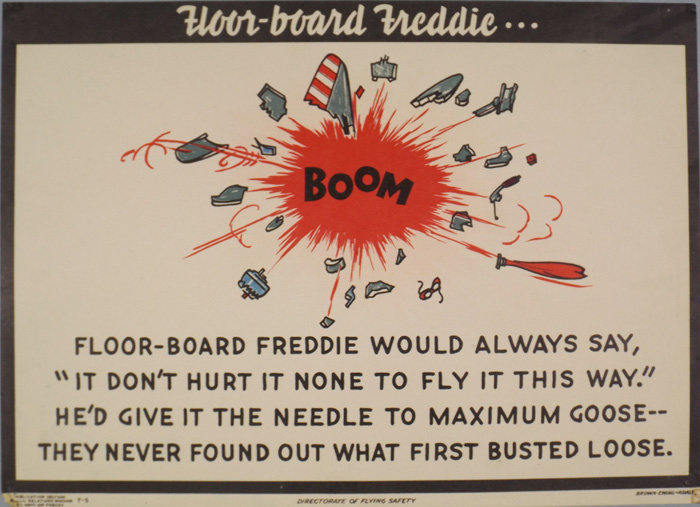
NOTES: Cartoons issued by the Directorate of Flying Safety, Publication Section, Public Relations Division, U.S. Army Air Forces. The T-5 on the print indicates that this is the fifth poster in a series of twelve. ADDITIONAL INFORMATION: The Life Magazine dated October 12, 1942 has an article discussing the publication of this set of posters. The article states: Speaking of Pictures...these posters promote safety in flying. These humorous flying posters are tacked on hanger walls of every U.S. station of the Army Air Forces. Although the drawings are funny and the jingles humorous, the message the posters carry to the young pilots of the Air Forces is serious: Safety in Flying. The posters are the brain child of Captain Willard Brown, an officer assigned to Wheeler Field in Hawaii, observing the common and easily avoidable mistakes many young pilots make, he hit upon this good-natured device as an effective means of driving hone common sense safety rules. Captain Brown worked out the first verses and the sketches were done by Jack Ewing, civilian fire chief at Wheeler Field. The finished drawings were made by Artist James Rawls. The pilot's reactions to them have been good. Since the first series of twelve was issued last spring more than 135,000 posters have been sent out. They have been so successful a new series has been started. DUPLICATE NOTES: Two (2) duplicate copies.
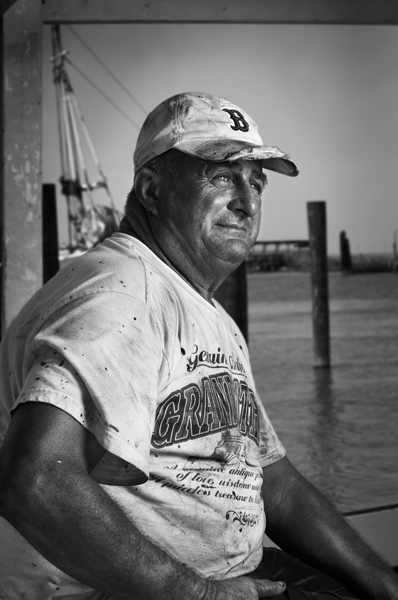
Freddie Wheatley didn’t really want to stop working for an interview and would have preferred to get cleaned up before a portrait was taken. His engine had blown up and he had quite a bit of engine oil on his shirt, face and arms. Freddie’s father, grandfather, great-grandfather, and son-in-law were or are watermen. Freddie Wheatley is 55 years old, a Red Sox fan, and is well known in the brotherhood of watermen all over the Bay.
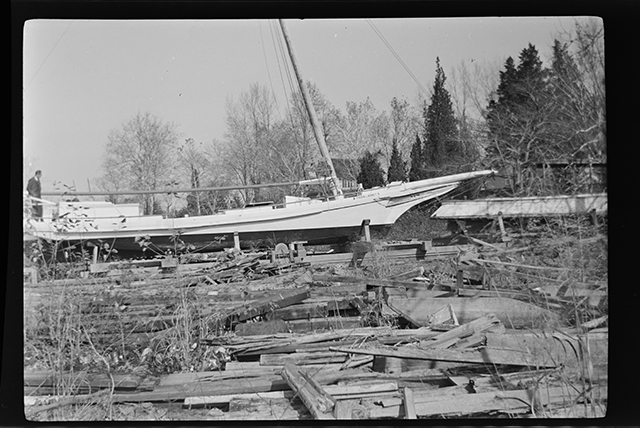
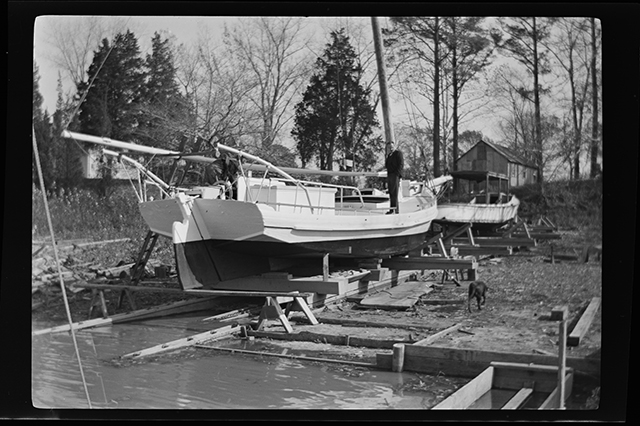
Shows an overall view of the starboard side of a skipjack out of the water on a railway. This shot is made in Smith's shipyard in Shad Point, Maryland. There is no caption for this negative.
Envelope: "3 sail batteau Virgil Dean. Cambridge, MD. May 1941"
Skipjacks–United States.; Sloops–United States.; Dwellings–United States.
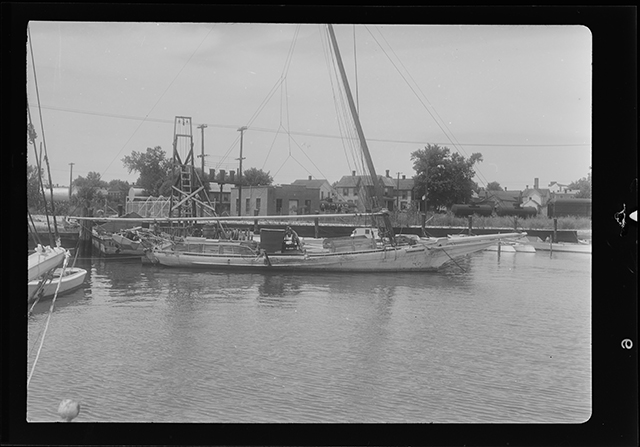
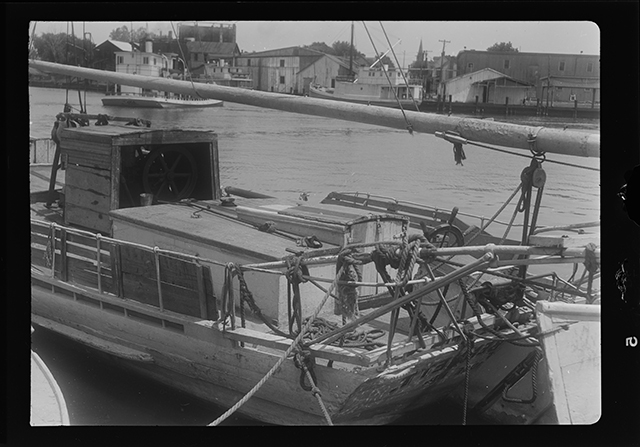
The caption incorrectly labels this as the schooner Virgie G. Dean, it is the skipjack Freddie L. Bennett. The boat is shown moored in a harbor with some dwellings in the background. There is no caption for this negative.
In item 0749 the skipjack Willie F. Bennett was shown to actually be Freddie L. Bennett. This shot is made from behind the boat looking forward and shows a winch amidships. There is no caption for this negative.
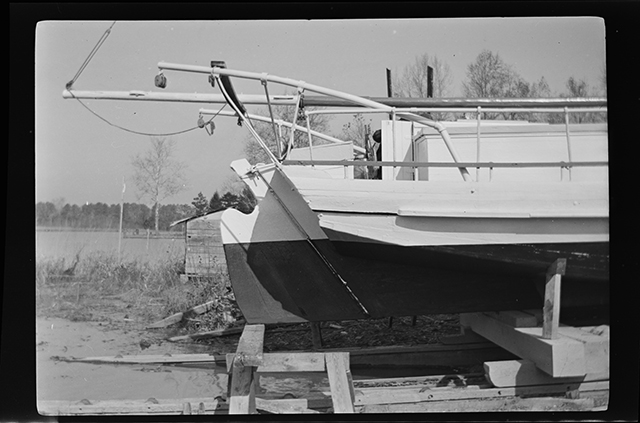
Shows a starboard side view of the stern of a skipjack out of the water on a railway. This shot is made in Smith's shipyard in Shad Point, Maryland. There is no caption for this negative.
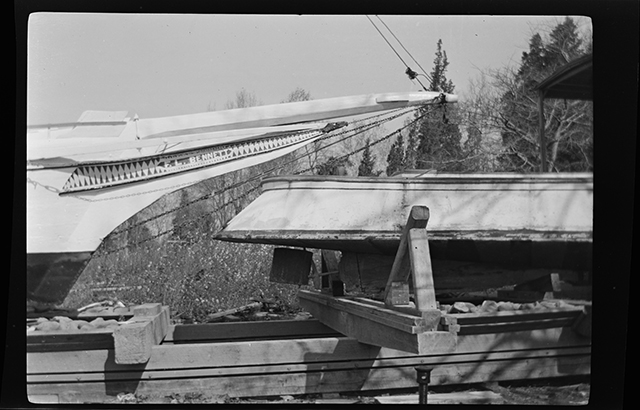
Shows a view of the trail board on the starboard side of a skipjack out of the water on a railway. This shot is made in Smith's shipyard in Shad Point, Maryland. There is no caption for this negative.
View of Aux. Freddie Embry singing at the mike to the accompaniment of the HRPE Band on the stage of the Port Theater, HRPE, Newport News, Va. on the occasion of radio broadcast. 5-20-43 Official photograph, U.S.Army, Signal Corps, HRPE Newport News, Virginia
Radio broadcasting–Virginia–Newport News.; Singers–Virginia–Newport News.; Singing–Virginia–Norfolk.; Bands (Music)–Virginia–Newport News.
Auxiliary Freddie Embry singing on stage with the HRPE band behind her.
Shows a view of the stern of a skipjack out of the water on a railway, two men can be seen on the deck of the boat. This shot is made in Smith's shipyard in Shad Point, Maryland. There is no caption for this negative.
Shows a view of one side of a the deck of a sloop from about amidships looking aft to the stern. This shot is made in Smith's shipyard in Shad Point, Maryland. There is no caption for this negative.
Shows a view of one side of a the deck of a sloop from about amidships looking forward to the bow. This shot is made in Smith's shipyard in Shad Point, Maryland. There is no caption for this negative.
Envelope: "3 sail batteau Virgil Dean. Cambridge, MD. May 1941"
Skipjacks–United States.; Sloops–United States.; Dwellings–United States.
The caption incorrectly labels this as the schooner Virgie G. Dean, it is the skipjack Freddie L. Bennett. This is clearly a continuation of the shot in 0749. The shot is from amidships looking forward to the bow and includes a good view of a winch. There is no caption for this negative.
Shows the skipjack Freddie L. Bennett and not Willie F. Bennett as in the caption. The boat is shown out of the water on a railway. There is no caption for this negative.
Shows a skipjack on land for repair at a rural shipyard. An automobile is in the foreground and group of people have gathered near the boat. There is no caption for this negative.
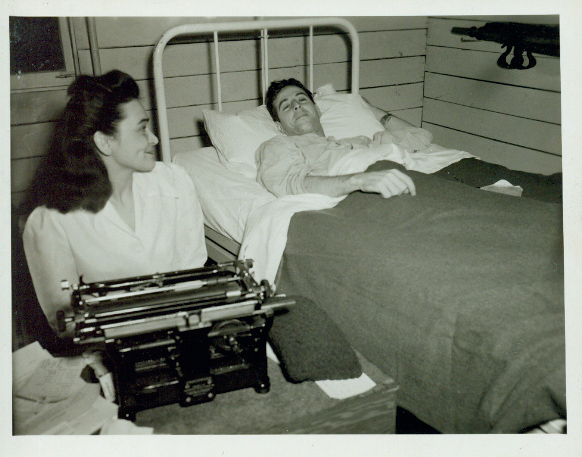
The first litter patient to arrive at CPH, Va., was Pvt. Freddie Badeaux, 38656135, of new Iberia, La. he is shown giving record of his case to Mrs. Loretta N. Rossiter, of Grand Rapids, Minn., Clerk Typist (CAF-2) from Morale and Personal Service Branch, CPH, Va. Pvt. Badeaux was serving in the Infantry in Co. 396, 9th Repl. Bn., 24th Depot. Photo taken at CPH.
World War, 1939-1945–Casualties–United States.; Allied health personnel and patient.; Hospital beds–Virginia–Newport News.; Typists–Virginia–Newport News.; Dictation (Office practice).
A woman with a typewriter sits next to a man lying in bed. She has a concerned look on her face.
NOTES: Sketchbook No. 29 of pencil drawings created by Antonio Jacobsen from 1878 to 1918 for his artworks. VESSELS LISTED IN SKETCHBOOK NO. 29, VARIOUS DATES W.A. SCHOLTEN (Screw Steamship) (Service Dates 1874-1887) BRASHEAR (Vessel Built 1875) DONA AMELIA (Screw Steamship) (Vessel Built 1876) P. CALAND (Screw Steamship) (Service Dates 1874-1910) JAMES S.T. STRANAHAN (Screw Tug) (Service Dates 1883-1905) WILLIAM J. MC CALDIN (Screw Tug) (Vessel Built 1876) JOHN H. HAMMITT (Screw Tug) (Service Dates 1864-1892) ANNA J. KIPP (Screw Tug) (Vessel Built 1873) BERGENSEREN (Screw Steamship) (Vessel Built 1884) ADA (Screw Steamship) (Vessel Built 1881) C.W. JANES (Barkentine) (Vessel Built 1884) LONGHIRST (Screw Steamship) (Vessel Built 1879) JOHN MANN (Ship) (Vessel Built 1867) INVERLOCHY (Bark) (Service Dates 1895-1902) GEORGE H. DENTZ (Screw Tug) (Vessel Built 1880) FREDDIE HENCKEN (Schooner,3) (Service Dates 1882-1892) FOSCOLIA (Screw Steamship) (Vessel Built 1879) LEVINA F. WARREN (Schooner,3) (Service Dates 1871-1892) CITY OF NEWCASTLE (Screw Steamship) (Service Dates 1878-1923) CACOUNA (Screw Steamship) (Vessel Built 1910) ATHENS (Screw Steamship) (Vessel Built 1877) CAPE RACE (Bark) (Vessel Built 1874) COMAL (Screw Steamship) (Vessel Built 1885) SOVERIGN (Screw Yacht) (Service Dates 1896-1929)
7 COURTHOUSE STREET - HASTINGS - ENGLAND - Related Place
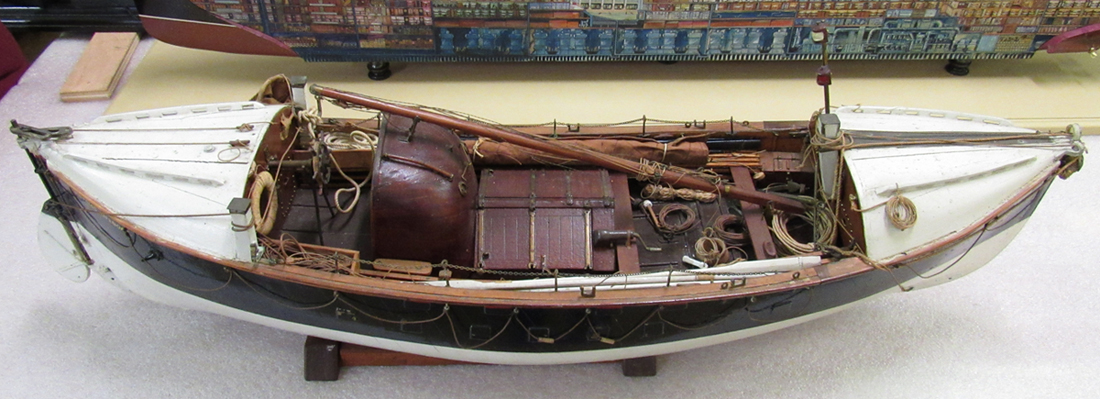
NOTES: Model equipped with electric motor. A modern Lifeboat of the Royal National Lifeboat Institution. "The latest type 35'6". Lifeboat is notable for her ability to stand up to heavy seas. She frees herself of water and has ample reserve of buoyancy when floaded. The hull is built of two skins of mahogany or teak over a frame work of rock, elm and oak. Up to date motor vessels, which have specially constructed engines (a single 35 BHP engine) carry a searchlight, a Morse signalling lamp, fire extinguisher, oil-sprayer, a line-throwing gun, and wireless apparatus." These boats carry a crew of 7 men. Daily Press, August 16, 1936: One of the interesting ship models in the collection of the Mariners' Museum is one of a British lifeboat. This is unique among the museum's models in that not only is it built and fully equipped to scale, but also it will actually run, being actuated by a small electric motor. The model was obtained in England and was made by W. R. Hilder of Hastings. It represents the Cyril & Lillian Bishop" of that por, one of the most up-to-date vessels of the Sussex shore patrol. This type of boat should not be confused with lifeboats carried on board ships. She is a large boat and is stationed to a shore post of the Royal National Lifeboat Institution, running out regardless of the weather to the assistance of distressed shipping. These vessels are notable in their ability to stand up in heavy seas. Air compartments will keep her afloat even though waves might break aboard and fill her. The equipment includes wireless apparatus, fire extinguishers, oil sprayer for making a slick to prevent breaking seas, searchlight, life preservers, and a line throwing gun. In addition to a powerful and specially constructed gasoline engine, modern lifeboats carry auxiliary masts and sails, and of course oars so that all else failing, the crew may at least progress with an "ash breeze". The model is approximately 30 inches long and illustrates a novel design of propeller tunnel so constructed to protect the propeller from coming fouled with such obstructions as pieces of rope, seaweed, etc. Since the keel is carried right aft to join the stern post, the vessel does not loose anything in strength and the propeller is protected when the lifeboat is hauled out on the beach. ADDITIONAL INFORMATION: Shipping Wonders of the World. part 8. "The Drama of Lifesaving". page 239; Dawson, Major A.J. Britains Life-boats. London. 1923. VK 1357 D3; Brown, A.C. Mariners' Museum Miscellany. 1936. Number 30.; Rarnett, J.R. "Motor Lifeboats of Royal National Lifeboat Institution". Trans. Inst. Nav. Arch. Volume 52. 1910. page 122 VESSEL INFORMATION: Boat Name: Cyril and Lilian Bishop Boat Type: R.N.L.I. Lifeboat Boat Length: 35ft 6ins Boat Beam: 8ft 10ins Boat Draft: 2ft Boat Displacement: 9 tons Boat Engine: 35hp Weyburn Ford petrol Boat Construction: Double diagonal Boat Builder: J. S. White, Cowes, I o W Boat Year: 1931 Hastings lifeboat, the Cyril and Lilian Bishop, went into service in 1931 as a shallow-draft sailing lifeboat. Built at Cowes for the RNLI, she was a self-righter - and proved it, when she capsized during service in 1944. In 1950 she was sold as a fishing vessel and went to the West coast of Scotland where Arra Fletcher bought her in 1976. He re-named her Lindy Lou after his daughter and brought her to the free port of Askaig on the Isle of Islay. There, she earned fame when her owner fought a battle against authority in 1980. The Duke of Kent was due to visit the island and the powers that be wanted the old boat removed from the harbour because of complaints that her time and weather-worn appearance might offend the Royal eye. Arra Fletcher who had painted her and dressed her overall, and whose ancestors arrived in Islay centuries ago, occupied his ship to defend the islanders' right to free use of the harbour. He won the day when his case was taken up by press and TV after letters of protest to 10, Downing Street and Buckingham Palace and a flood of sympathetic messages from all over Britain. Lindy Lou lay in Askaig harbour for some time before being rescued by the Dunkirk Little Ships Restoration Trust. She was acquired by Simon Evans before being transported to his yard in Sens, France where she is being restored. [Information found online at Vimeo.com] The Cyril and Lilian Bishop lifeboat, which saved 34 lives in Hastings during the 1930’s, spent four days and four nights rescuing British and French soldiers from the beaches during the evacuation of Dunkirk in World War II… Mrs. Lilian Philpott, a rich London Woman agreed to finance two new lifeboats at a cost of £4,500 each on condition that one was Named the ‘Cyril and Lilian Bishop’ after herself and her first husband. The vessels were to be allocated to Hastings (to replace the Charles Arkoll II) and Newhaven. The keel of the new Hastings Motor lifeboat was laid at Cowes on June 27th 1930 but, sadly, Mrs Philpott died the same week that the Cyril and Lilian Bishop received her completion order. With her new 35hp petrol engine the new boat, Hastings’ first motor lifeboat was the same size as the Charles Arkoll II but more strongly built and twice as heavy as the old boat. The new boat finally arrived in Hastings from the boat builders, J Samuel White & Co of Cowes, Isle of Wight in April 1931, crewed by Will Curtis, Frank Martin, Fred Doughty and now the boat had an engine she needed a mechanic, Bill Hilder. Another innovation after a series of tests was for her to be fitted with a radio receiver for communication which replaced visual signals and rockets. With no tractor it meant more helpers on the shore, sometimes even horses were used. She is best known and earned her nickname ‘The Ghost of Dunkirk when in late May 1940 the Dunkirk evacuation needed shallow draught vessels to make their way to Dover and the RNLI was asked to send as many lifeboats as possible and coxswain George Moon quickly called a crew together consisting of Will Martin, Bodger Barton, Jumbo White, Bill Hilder and finally Freddie Button. On arrival at Dover George Moon tells us that all the lifeboats were commandeered by the Royal Navy and he and the rest of the crew travelled back to Hastings by train. It was said that she appeared like a ghost amongst the smoke and mist during the evacuations. After doing her duty at Dunkirk the boat was hosed out to remove the vast quantities of sand from her decks and a hole was found in her bow, sand in her fore locker and her mast head light was also full of sand. Two bullet holes were also found. It is well-documented that the Ramsgate and Margate lifeboats each rescued on average 850 evacuees a day so the Cyril & Lilian Bishop can only be comparable with the same quantities of evacuees. The story of the Cyril and Lilian Bishop in her RNLI mode continued until 1950 when the new Hastings Lifeboat, the MTC arrived in Hastings. SEE: http://hastingschronicle.net/cyril-and-lilian-bishop-big-gallery/ for images of vessel.

 ln269
 P0003-01 - J-627
 P0003-01 - J-631
 MS0568-55
 MS63-747-4 Freddie L Bennett
 MS63-750-2 Virgil Dean
 MS63-749 Willie L Bennett
 MS63-747-3 Freddie L Bennett
 MS63-747-5 Freddie L Bennett
 P0003-01 - E-2249
 MS63-747-6 Freddie L Bennett
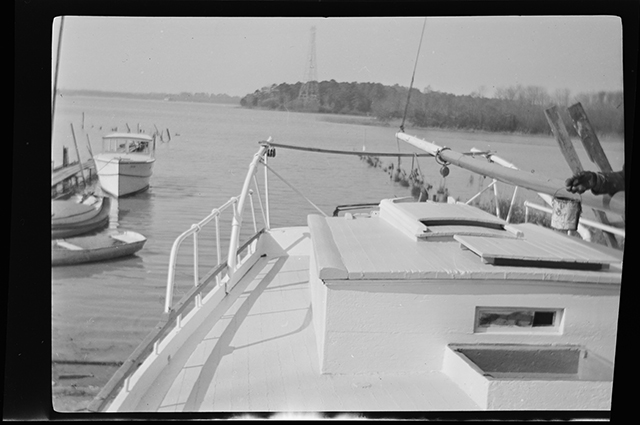 MS63-747-1 Freddie L Bennett
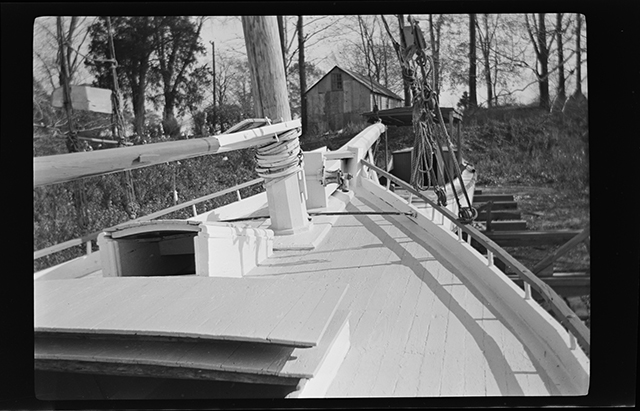 MS63-747-3 Freddie L Bennett 1
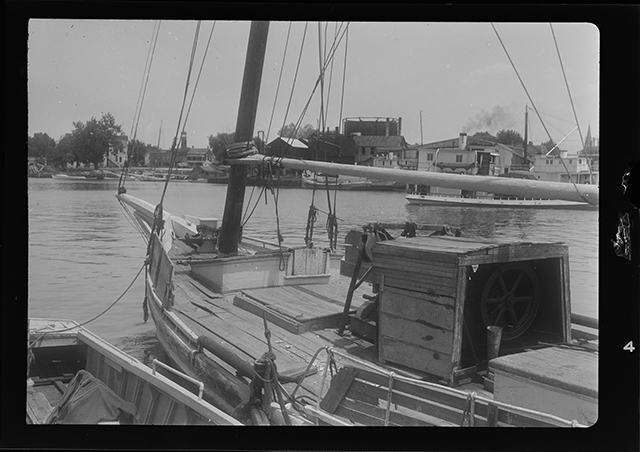 MS63-750-3 Virgil Dean
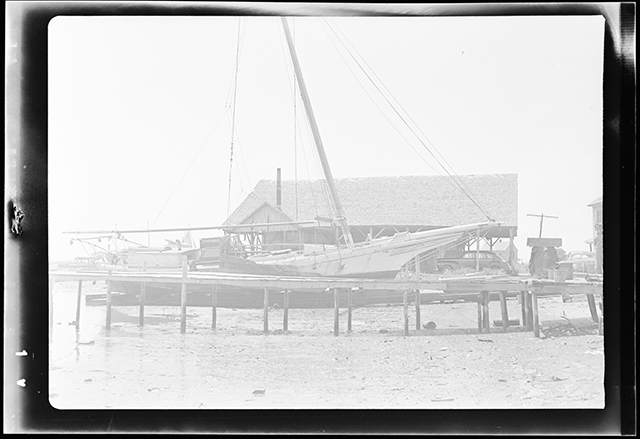 MS63-748 Willie L Bennett
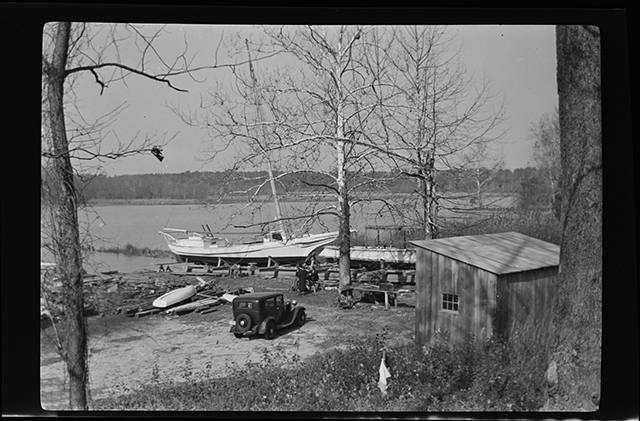 MS63-708 Smith Shipyard
 E12697
 md22a